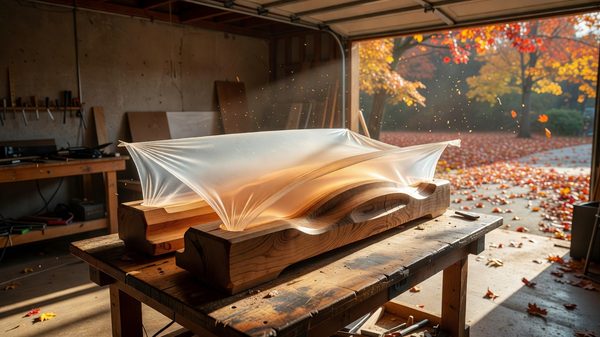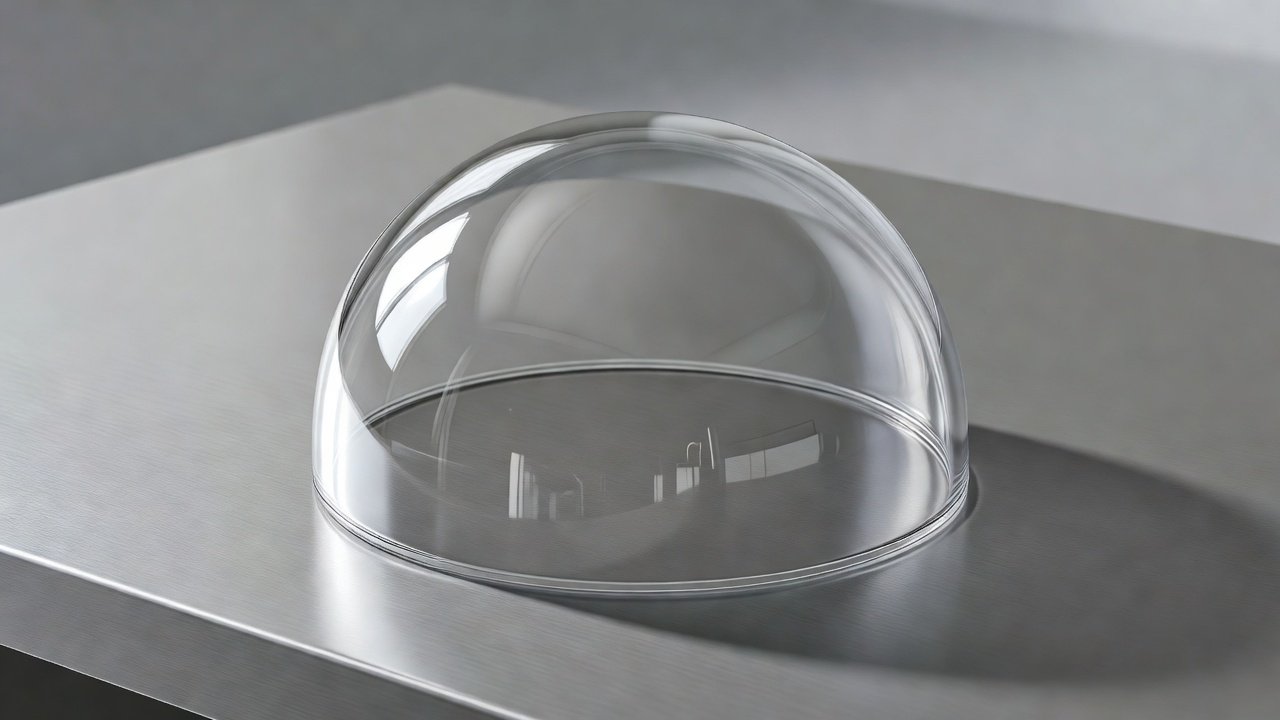
The clear dome is the part of a B9 build that most often stalls a project, and it stalls for a structural reason rather than a technical one: almost nobody makes large, optically clean acrylic hemispheres as a standing product. They get made in runs, and if you miss the run you wait for the next one.
Understanding why that is makes the sourcing decision much clearer.
Why domes come in batches
A vacuum-formed or free-blown dome needs a mould or a ring, a sheet large enough to draw without thinning past usability, and an oven that can bring that sheet to forming temperature evenly. Tooling is the expensive part, and it is a fixed cost whether you make one dome or forty. A shop that has built the tooling wants to run a batch against it; a builder who needs one dome cannot justify commissioning the tooling alone.
The result is the pattern that frustrates first-time builders: group runs organised within builder communities, a batch produced, the batch sold, and then a gap. The waitlist is not artificial scarcity. It is the economics of a one-off tool.
The practical consequence is scheduling. Get your name on a list early, before you need the dome, and build the rest in the meantime. Builders who leave the dome until the end routinely spend longer waiting for it than they spent on the whole torso.
The four sourcing paths
Community group runs. Best optical quality for the money and the most likely to be dimensionally correct for the application, because whoever organised the run cared about that. Downside: timing is out of your control.
A custom forming shop. Plenty of plastics fabricators do this work — shops running heavy-gauge machines handle full 4×8 sheets up to about 3/8" thick in ABS, HIPS, PETG, Kydex and acrylic. Some make domes as a catalogue item in square, rectangular, triangular and round profiles for skylight and display applications. This path costs more per unit and requires you to specify properly, but the lead time is a quote rather than a queue.
Stock domes. Industrial and display-case suppliers sell hemispheres off the shelf. The geometry constraint is the thing to know before you start hunting: a true hemisphere has height equal to half its diameter. If your application needs a dome taller than that relative to its base — and several replica applications do — no stock hemisphere will fit, and you are back to a custom job.
Form it yourself. Viable at hobby scale, and the results range from excellent to a bin full of expensive scrap depending on how carefully you control heat.
Specifying a custom dome without wasting the quote
Give the shop five numbers and one word, and you will get a usable quote first time:
- Outside diameter at the base, and whether it needs a flange for mounting.
- Height, stated explicitly — do not let them assume a hemisphere.
- Material: acrylic for optical clarity and scratch resistance, polycarbonate for impact resistance at the cost of clarity and scratch performance.
- Finished wall thickness where it matters, not starting sheet thickness. A formed dome thins as it draws.
- Tint: water-clear, smoke, or a specific transmission percentage.
- Edge finish: as-trimmed, flame-polished, or machined to a dimension.
The wall-thickness point is where most first orders go wrong. Under vacuum forming, ABS and HIPS reach roughly a 2:1 draw ratio unassisted and about 3:1 with plug assist, and acrylic is less forgiving still. A deep draw from thin stock produces a dome whose apex is noticeably thinner than its base — fine for a static display, not fine if the dome carries load or takes handling.
If you form it yourself
The hobby-scale approach is a heat source, a former, and enough vacuum to pull the softened sheet. Builders have had real success with a heat gun plus an inexpensive vacuum generator — the air-conditioner evacuator sold at discount tool shops is the commonly cited option — heating the sheet until it sags into a box and then applying vacuum to round out the shape.
Four things decide whether this works:
- Even heating. A heat gun waved by hand produces hot and cold zones, and cold zones do not draw. A domestic oven with a temperature you can trust beats a heat gun for anything above small sizes.
- Dry acrylic. Cast acrylic absorbs moisture, and moisture becomes bubbles at forming temperature. Pre-dry the sheet at low oven temperature for several hours before forming.
- Clean everything. Any dust between the sheet and the former is permanently embossed into the surface. Leave the masking paper on until the moment you load it.
- A radiused former. Sharp edges concentrate the draw and produce thin spots exactly where you don’t want them.
Expect to scrap the first two or three. Budget the sheet accordingly and treat the early attempts as calibration rather than failures.
The realistic plan
Get on a group-run list now, even if the build is months out. In parallel, price one custom dome from a local plastics fabricator with the six specifications above — often the quote is lower than builders assume, and it gives you a firm date rather than an open queue. If both look slow or expensive and you enjoy process work, buy a sheet and try forming one; the skill transfers directly to every other clear part on a build.
What does not work is waiting until everything else is finished and then discovering the dome is a four-month problem.