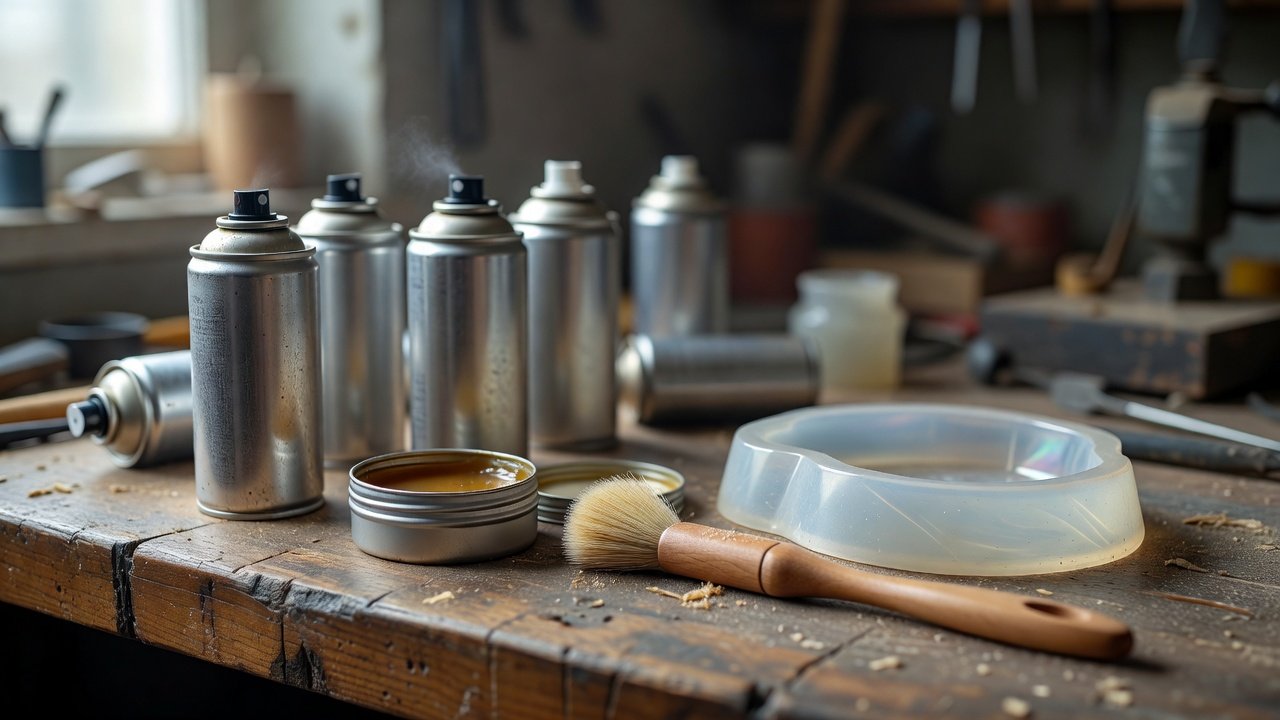
Most mold failures are discovered at the moment of demolding, when it is too late to fix them. A master welded into silicone, a casting locked into a mold, a fiberglass shell that will not leave its plug: all of these are release problems, and most trace back to using the wrong agent for the material pair or applying the right one badly. The question is never just “which release is best.” It is which release suits the two surfaces that have to part.
Start with the material pair
A release agent sits between two materials. Silicone against silicone, urethane against silicone, and polyester resin against a fiberglass mold are three different problems, and the products are not interchangeable.
Silicone against silicone is the hardest. Silicone sticks to itself, and common silicone-based releases can contaminate the surface. A release for this job cannot contain a significant amount of silicone oil. Mann Ease Release 200, distributed by Smooth-On, is the product the manufacturer positions for releasing silicone rubber from other surfaces, including silicone, and a light mist coat is meant to leave surface detail intact. A frequently used low-cost alternative is petroleum jelly thinned with mineral spirits so it can be applied as a thin film.
Urethane against silicone is more forgiving. Many platinum-cure silicone molds release urethane resin with little help, which is why the site’s mold making basics note that clean separation is possible without an agent. A release still extends mold life and makes the first pull safer, and it matters more for deep, tight or textured cavities.
Resin against a rigid mold (fiberglass, epoxy tooling, metal) needs a stronger system, covered below.
Spray releases
Ease Release 200 is an aerosol release that Smooth-On lists as working with urethane elastomers, epoxy, polyester resins, RTV silicones, rubber and thermoplastics, on molds of aluminum, steel, epoxy, rubber and silicone. The directions call for spraying from 6 to 8 inches away for an even coat, letting it dry, and reapplying a light coat before each use. It is rated from 70 to 500 degrees F, and the manufacturer recommends storing and using it at room temperature.
Two specifics are worth knowing. First, Smooth-On’s page warns that molded parts must be thoroughly cleaned before staining, painting or bonding. Residue that helped the part leave the mold also keeps paint from sticking. Second, Ease Release 200 is not meant for urethane foams. For expanding foam the manufacturer points to Ease Release 2831, a wax-based, non-silicone liquid designed for releasing polyurethane foams from non-porous surfaces including silicone molds. If you pour foam fills for large shells, that distinction matters.
Other makers sell comparable products. Pol-Ease 2300, for example, is intended for polyurethane rubber or plastic molds and is not meant for use with liquid silicone rubber, so a product that works in one pairing can fail in another. Read the technical bulletin for the pairing you actually have.
Wax and PVA for fiberglass
Fiberglass and composite molds use a two-step approach. A paste wax is applied first, followed by polyvinyl alcohol (PVA) film. Partall Paste 2, a hydrocarbon and microcrystalline wax with no silicone, is described by its maker as a general-purpose release for fiberglass and metal molds and as a compatible prime coat for PVA. The usual directions call for three to four layers of wax buffed to a high gloss, then PVA applied in three coats: a thin mist coat first, then two heavier flow coats, each dried fully before the next.
PVA dries to a film that resists the solvents in the resin system but is water soluble, which is why it works as a barrier and also why it washes off the finished part. For large shells made over a plug or in a fiberglass mold, such as torso covers, this wax-plus-PVA combination is the standard. The site’s comparison of fiberglass and urethane foam shells explains when each construction suits a build.
Petroleum jelly, soap solutions and other kitchen-drawer options
Petroleum jelly is the traditional hobby release for silicone-on-silicone, applied thin and brushed into recesses. It works, but heavy application rounds off crisp detail and can leave an oily film. Soap-and-alcohol mixes circulate in hobby forums and can work in some pairings, though makers advise testing first because results vary with the silicone and the surface. Treat these as backups for low-stakes molds, not as a substitute for a tested product when a one-off master is on the line.
Application rules that prevent most failures
- Seal porous masters first. Plaster, wood and unsealed foam grab silicone mechanically. The troubleshooting guide covers lacquer and wax sealing before release.
- Less is more. A thin, even film does the job. Pooled release fills detail and prints into the mold as texture.
- Brush into recesses and wipe back. Use a soft brush, then wipe or blow off excess from corners.
- Let it dry or flash. Spray releases need a few minutes before you pour; check the can.
- Reapply as directed. Rigid molds need fresh release regularly, and Smooth-On’s directions call for a light coat before each use of Ease Release 200.
- Test on a scrap. Pour a small amount of the actual silicone or resin against a sample surface treated the same way. A five-minute test is cheaper than a lost master.
Release and painting
A release that works on the part also affects finishing. Wash castings with warm water and a mild detergent, and use a solvent suitable for your resin on stubborn residue, before priming. If paint beads or crawls, release residue is the likely cause. See the site’s guide to painting and finishing resin castings for surface prep.
Choosing quickly
For silicone-on-silicone, use a release formulated for it, or thin petroleum jelly on a low-stakes mold. For urethane into silicone, use a light mist of a silicone-compatible spray, or none if the manufacturer says the silicone releases cleanly. For fiberglass or epoxy tooling, use paste wax plus PVA. For foams, use the foam-specific release. Whatever you choose, match it to the manufacturer’s stated materials and test on scrap before committing the master.